How Can You Use Spices Effectively in Cooking?
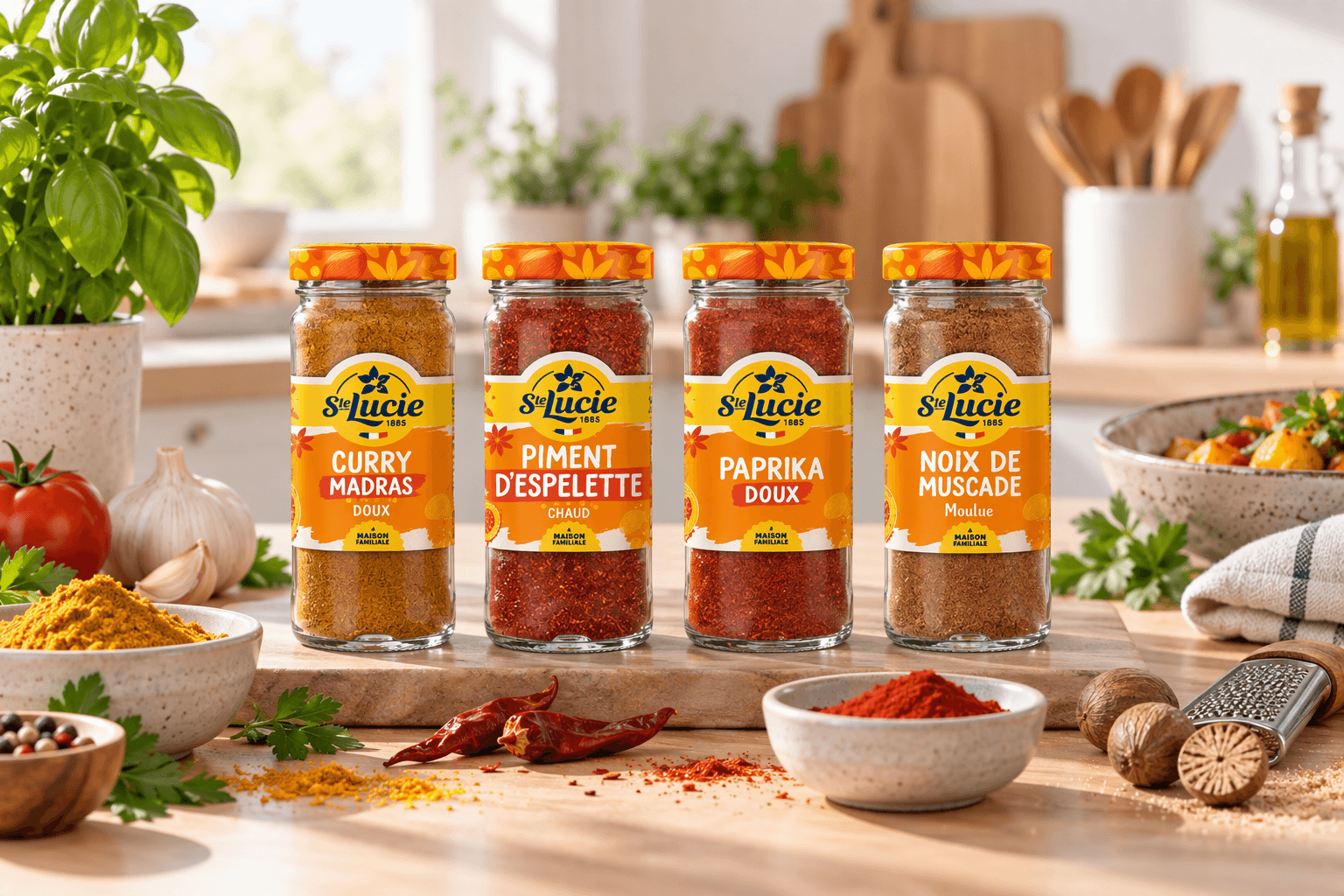
To use spices effectively in cooking, you need to add them at the right time during cooking, measure them out gradually, and combine them thoughtfully. When stored properly, they retain their full flavor from one dish to the next.
Cumin, paprika, curry, nutmeg, or Espelette pepper: spices can transform a simple dish into a fragrant meal—as long as you know how to use them. In this guide, Sainte Lucie —a company specializing in spices and baking supplies since 1885—shares tips on choosing between whole and ground spices, knowing when to add them, measuring them without overdoing it, toasting them, pairing them, and storing them. You’ll also find a chart that lets you see at a glance which spice to use with which dish.
Table of Contents
- The 5 Golden Rules for Using Spices Effectively
- Whole or ground spices: Which should you choose?
- When should you add the spices while cooking?
- How do you measure out spices without using too much?
- Should spices be roasted?
- Which spices go with which dishes?
- Individual spices or spice blends: How do you combine them?
- How can you store spices so they retain their flavor?
- Mistakes to Avoid When Using Spices
- What recipes can you use to put these tips into practice?
- Spices: A Habit to Adopt in Your Daily Life
- Frequently Asked Questions About Using Spices
The 5 Golden Rules for Using Spices Properly
These five rules are all you need to make most of your spicy dishes a success.
- Start small: add a small amount, taste it, and then adjust. It's always easier to add a spice than to take it out.
- Choose the right time: whole spices release their flavor right from the start of cooking, ground spices develop their flavor as the dish cooks, and the most delicate spices are added at the end.
- Bring out the flavor of ground spices: sauté them for a few seconds over low heat in some fat to release their aromas.
- Combine rather than pile on: two or three complementary spices produce a cleaner result than five or six spices thrown together at random.
- Store them away from air, light, heat, and moisture to preserve their fragrance.
Whole or ground spices: Which should you choose?
Whole spices generally retain their aroma longer, while ground spices are more convenient for everyday use. The two forms complement each other: it all depends on your recipe and how much time you have.
Whole Spices
Seeds, cloves, sticks, or berries: when used whole, spices retain their aromatic qualities. They’re ideal for slow cooking, where they infuse gently, and can be ground or crushed at the last minute for a more intense flavor. This is true of mustard seeds, black cumin (nigella seeds), and peppercorns to be ground in a mill.
Ground spices
Ready to use, they can be added directly to a sauce, marinade, dough, or stir-fry. This is the easiest way to season quickly—for example, with our ground cumin, sweet paprika, or ground nutmeg. However, their aroma fades more quickly once the jar is opened, so be sure to close it tightly after each use.
When should you add the spices while cooking?
The right time depends on the form of the spice and the cooking method: add whole spices at the beginning of cooking, ground spices during cooking, and spices with a delicate aroma at the end of cooking or just before serving.
At the start of cooking: spices infusing
Bay leaves, cloves, cinnamon sticks, and cumin seeds release their aromas slowly. Add them at the beginning of a slow-cooked dish, broth, or long-simmering sauce so that they infuse the entire dish with flavor. Be sure to remove the bay leaves and cinnamon sticks before serving.
During cooking: ground spices
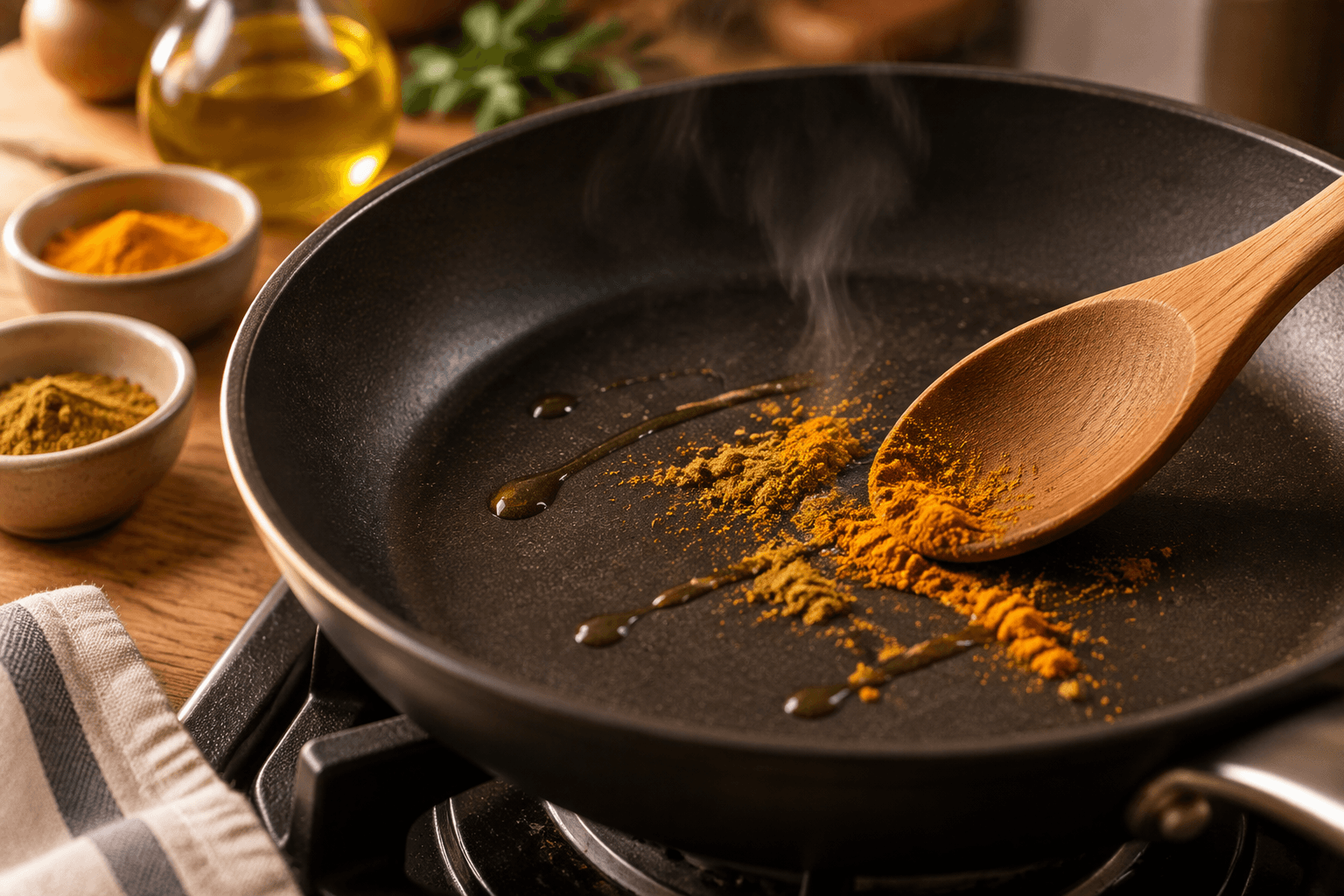
Curry, turmeric, paprika, and ground cumin release their flavors when they come into contact with hot fat. Sauté them for a few seconds over low heat in a little oil or butter along with your other ingredients, being careful not to let them burn. Paprika, in particular, becomes bitter if heated over high heat: lower the heat or add it at the same time as a little liquid.
At the end of cooking or just before serving
Spices with a more delicate aroma—or those meant to season a dish at the very last moment—are added at the end: Espelette pepper (AOP ) on eggs or fish, freshly ground pepper on grilled meat, nutmeg on mashed potatoes. When added after removing the dish from the heat, they retain all their freshness.
Sainte Lucie 's tip: In a slow-cooked dish, you can combine all three steps. Add a cinnamon stick at the beginning, sauté the curry powder with the onions, and then sprinkle in a pinch of Espelette pepper just before serving.
How do you measure out spices without using too much?
To get the spice balance right, start with a small amount, taste as you cook, and then adjust. The strongest spices, such as chili peppers, cloves, and nutmeg, should be used very sparingly.
- Follow the guidelines on the package: when a serving size is listed on the container, use it as a good starting point, then adjust it to suit your taste.
- Taste as you go: the flavor of a spice changes as it cooks. A simmering dish may seem mild at first but much more intense an hour later.
- Go easy on strong spices: chili peppers, cloves, cardamom, and nutmeg can quickly overpower a dish. One or two cloves are enough to flavor a broth.
- Use a spoon instead of pouring directly from the jar into the pot: this allows for more precise measurement, and the steam won't make the rest of your spices damp.
- Keep salt in mind: salty spices, such as Espelette pepper AOP salt or celery salt, should be used in place of salt, not in addition to it.
Our serving guidelines for 4 people
Here are the recommended amounts listed on our packaging, along with a guideline for cloves: a starting point that you can then adjust according to your taste and recipe.
| Spice | Recommended dosage | Tip |
|---|---|---|
| Ground cumin | 2 tablespoons for 4 people | Add while cooking |
| Black cumin | 1 tablespoon for 4 people | Add while cooking |
| Sweet paprika | 1 tablespoon for 4 people | Add while cooking over low heat |
| Ground turmeric | 1 to 2 teaspoons for 4 people | Add during cooking, along with the other ingredients |
| Ground nutmeg | ½ teaspoon for 4 people | Perfect in mashed potatoes, a gratin, or a béchamel sauce |
| Cloves | 1 to 2 cloves per pot of broth | Remove before serving |
Should spices be roasted?
Toasting spices isn't necessary, but it significantly enhances the aroma of whole spices. Simply heat them dry in a skillet for a few moments before using them.
Which spices should you roast?
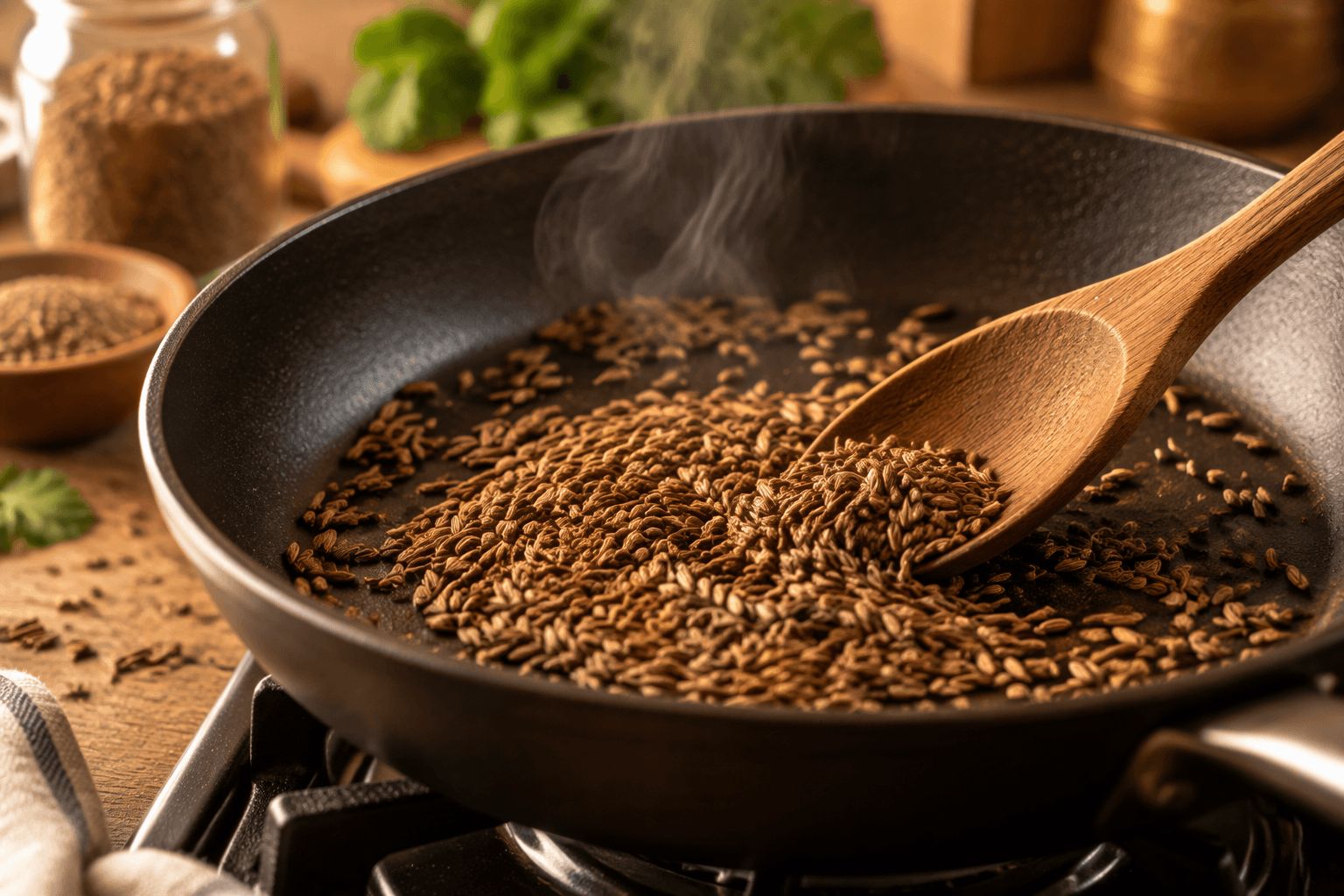
Roasting is suitable for whole spices: cumin, cilantro, fennel, and mustard seeds, as well as cardamom. It should be avoided with ground spices, which burn within seconds and become bitter. Cinnamon and bay leaves also do not hold up well to high heat.
How do you roast spices?
- Heat a skillet over medium heat without adding any oil.
- Add the whole spices and stir constantly for 1 to 2 minutes.
- Remove them from the heat as soon as they begin to release their aroma and turn slightly golden.
- Let them cool, then use them whole or shape them.
Which spices go with which dishes?
Every spice has its own character: some add heat, others sweetness, a smoky note, or a spicy kick. This chart helps you quickly find the right one for your dish.
| Spice | Flavor | Perfect with | When to add it |
|---|---|---|---|
| Cumin | Warm, slightly earthy | tajines, falafels, hummus, carrots, roasted vegetables | At the beginning or middle of cooking |
| Sweet paprika | Mild, slightly sweet | Potatoes, eggs, chicken, sauces | Midway through cooking, over low heat |
| Espelette Pepper AOP | Mild, fruity warmth | Eggs, fish, grilled meats, fresh cheese | At the end of cooking or when serving |
| Curry | Warm, with varying degrees of spiciness depending on the variety | Chicken, lentils, rice, shrimp, coconut milk | Midway through cooking, browned in fat |
| Turmeric | Warm, slightly bitter, golden color | Rice, soups, lentils, sauces | Midway through cooking |
| Garam masala | Warm and fragrant | Indian stews, legumes | Midway through or toward the end of cooking |
| Nutmeg | Warm, woody | Mashed potatoes, béchamel sauce, gratins, quiches | End of cooking |
| Harissa | Spicy | Couscous, vegetables, marinades | While cooking or in the marinade |
| Black cumin | Slightly peppery | Bread, roasted vegetables, salads | While cooking |
Key Takeaways
To put together a dish with confidence, think in terms of pairs: a base spice—such as cumin, curry, or paprika—that gives the dish its character, and a finishing spice—such as Espelette pepper, black pepper, or nutmeg—that adds a kick just before serving. This pairing is all you need for most everyday dishes.
You can find all of these spices in our selection ofspices, curries, and chili peppers.
Individual spices or spice blends: How do you combine them?
The best combinations feature two or three complementary spices: one adds heat, while another adds aroma or color. Ready-to-use blends are an easy way to get started.
Organizations That Work
- Cumin and cilantro: falafel, hummus, roasted vegetables.
- Paprika and garlic: potatoes, chicken, marinades.
- Curry and coconut milk: vegetable, chicken, or shrimp curries.
- Cinnamon and nutmeg: sweet-and-savory dishes, compotes, desserts.
- Chili and lemon: fish, shrimp, sauces.
Spice blends to save time
A spice blend combines several spices that have already been measured out for a specific use: it’s the easiest way to achieve a well-balanced result without having to mix everything yourself. Sainte Lucie offers everyday blends for daily meals, international blends to take you on a culinary journey, barbecue blends for grilling, and air fryer blends.
Want to put together your own selection? Create your own personalized spice kit with your favorite Sainte Lucie products.
How can you store spices so they retain their flavor?
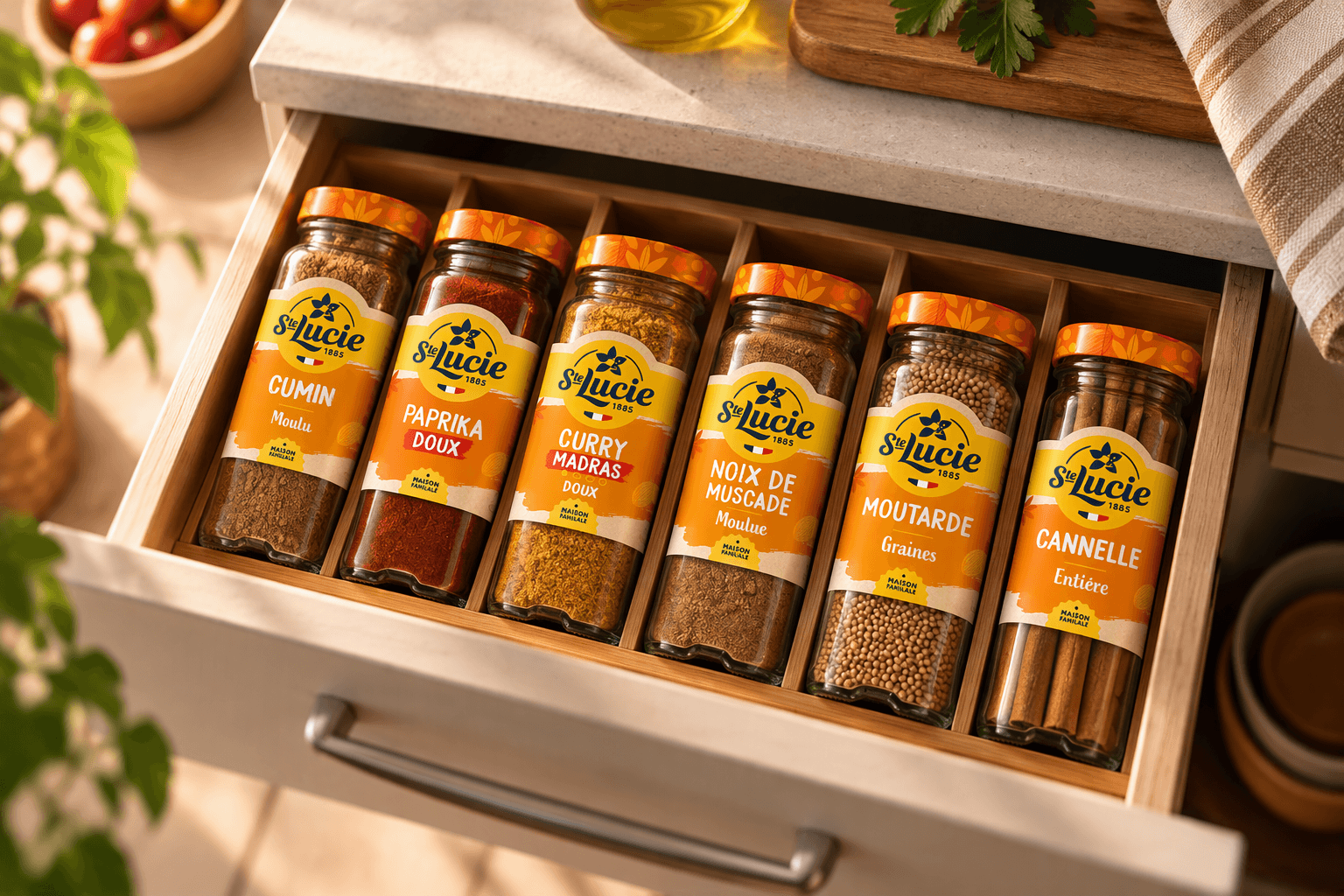
Spices should be stored in a tightly sealed container, away from air, light, heat, and moisture. Under these conditions, they retain their aroma for much longer.
- Store them in the right place: in a cabinet or drawer, away from stovetops, the oven, and windows.
- Be sure to close the jar or bag tightly after each use.
- Use a dry spoon to serve so that no moisture gets in.
- Choose whole spices for those you use infrequently: they usually retain their aroma longer than ground spices.
- Do the smell test: a spice that has almost no smell left will add little flavor to your dish. Also check the date on the package.
Mistakes to Avoid When Using Spices
- Add all the spices at once, regardless of the stage of cooking.
- Don't let the ground spices burn, especially the paprika, which turns bitter over high heat.
- Using too many spices in a single dish can result in the flavors becoming muddled.
- Season a dish as usual with a spice or spice blend that already contains salt.
- Leave the jars open or store them on top of the stove.
What recipes can you use to put these tips into practice?
Put these tips into practice with our spicy recipes: homemade falafel, chicken pad thai, deviled eggs with ham and paprika, or a Mexican bowl. You can also check out all our international recipes.
Spices: A Habit to Adopt in Your Daily Life
Frequently Asked Questions About Using Spices
-
What spices should you have in your kitchen when you're just starting out?
A few versatile spices are all you need to get started: good-quality black pepper, sweet paprika, cumin, curry powder, and a mild chili pepper like Espelette pepper. These alone cover most everyday dishes, from roasted vegetables to dishes with sauce. You can then expand your spice collection as your tastes evolve.
-
Can you replace salt with spices?
Spices don't completely replace salt, but they add flavor and allow you to use less salt. Paprika, cumin, curry, Espelette pepper, and aromatic herbs easily enhance the flavor of vegetables, meats, and sauces. Just make sure your spice blend doesn't already contain salt.
-
Do spices have an expiration date?
Spices have a best-by date (“best before”), not an expiration date. Once this date has passed, they gradually lose their aroma. Throw them away if their appearance or smell has changed, or if they form clumps that don’t break up when you shake the jar.
-
What is the difference between a spice and an aromatic herb?
Spices come from seeds, bark, roots, fruits, or flower buds: cumin, cinnamon, turmeric, pepper, or cloves. Aromatic herbs are leaves, such as thyme, parsley, basil, or oregano. The two complement each other very well in the same recipe.
-
How can you fix a dish that's too spicy?
Add a mild-tasting ingredient, such as cream, yogurt, coconut milk, or a little butter. You can also increase the amount of the dish’s base (vegetables, rice, broth) to dilute the seasoning, or add a touch of sugar or lemon to rebalance the flavors.
-
Can you use spices in desserts?
Yes, many spices also add flavor to desserts: cinnamon, nutmeg, cardamom, and ginger pair very well with cakes, custards, compotes, and cookies. Gingerbread is the best-known example: our gingerbread spice blend combines all the necessary spices in one simple step. To get started, try our pumpkin pie mix, and for your custards and cakes, check out our selection of vanilla for baking.