Pectin, gelatin, agar-agar: which one should you choose?
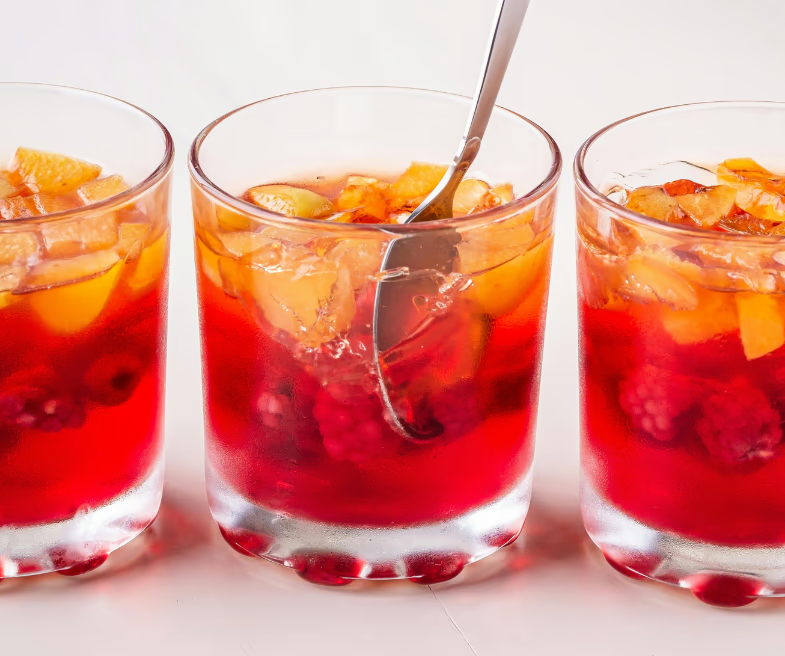
Agar-agar, gelatin, pectin… These essential ingredients in baking and creative cooking are often confused. Yet each has its own distinct properties and is used in specific contexts. Whether it’s the desired texture, dietary restrictions, or the type of recipe, discover how to choose the right gelling agent to ensure the success of all your creations.
Definition: What is a gelling agent?
A gelling agent is a texturizing agent that transforms a liquid mixture into a gel. It works by binding the ingredients together to create different textures—soft, firm, or brittle—which are highly sought after in both traditional pastry making and molecular cuisine.
There are two main types of gelling agents:
- Animal-derived gelling agents: such as gelatin (pork, beef, or fish)
- Plant-based gelling agents: agar-agar, pectins, alginates…
These ingredients are used in very small quantities, which is why it is important to measure them accurately using a suitable scale.
What is the difference between a gelling agent and gelatin?
Gelatin is a specific type of gelling agent derived from animals. It is characterized by its Bloom number, which measures its gelling strength.
Unlike plant-based gelling agents, gelatin imparts a soft, melt-in-the-mouth, and elastic texture that is highly prized in pastry making.
Agar-agar: The Go-To Ingredient for 100% Plant-Based Recipes
Agar-agar is plant-based. It helps give dishes a firm, crisp texture.
How do I use it?
- Agar-agar must be added before cooking
- It must be brought to a boil for at least 30 seconds to activate its gelling properties
- It does not work when cold and must never be frozen
What recipes are these for?
Jellies, fruit jellies, plant-based panna cotta, plant-based terrines, cake fillings, or desserts that need to hold their shape at room temperature.
Gelatin: Softness and Melt-in-Your-Mouth Texture in Baking
Gelatin is derived from animals. It gives dishes a soft, melt-in-your-mouth texture. It dissolves in hot liquid and should not be brought to a boil; instead, it should be added after removing the pot from the heat. Available in sheets or powder form:
- The sheets are easy to handle
- The powder allows for very precise measurement
Both formats offer excellent gelling properties and freeze well.
What recipes are these for?
Mousses, panna cotta, cream-based desserts, dessert dishes, whipped ganaches… any recipe that calls for a smooth, melt-in-your-mouth texture.
Good news: it’s entirely possible to make halal desserts using suitable alternatives.
We offer certified halal gelatin made from:
- or fish
- or beef
It offers the same technical performance as traditional gelatin: a smooth texture, excellent set, freeze-stability, and ease of use. An ideal solution for balancing dietary restrictions with the demands of pastry-making.
And pectin: is it only for jam?
Pectin (E440) is a plant-based gelling agent that occurs naturally in fruit. It is essential for:
- jams
- frosts
- fruit jellies
- some fruity notes
It works particularly well in acidic and sweet environments, offering a firm yet melt-in-your-mouth texture.
In summary: Which gelling agent should you choose?
- Agar-agar: plant-based, potent, with a firm and brittle texture
- Gelatin (halal or conventional): soft, melt-in-your-mouth, ideal for baking
- Pectin: perfect for fruit-based and sweet dishes
The right gelling agent is, above all, the one that suits your recipe, the desired texture, and your dietary needs.