How do you keep ice from melting?
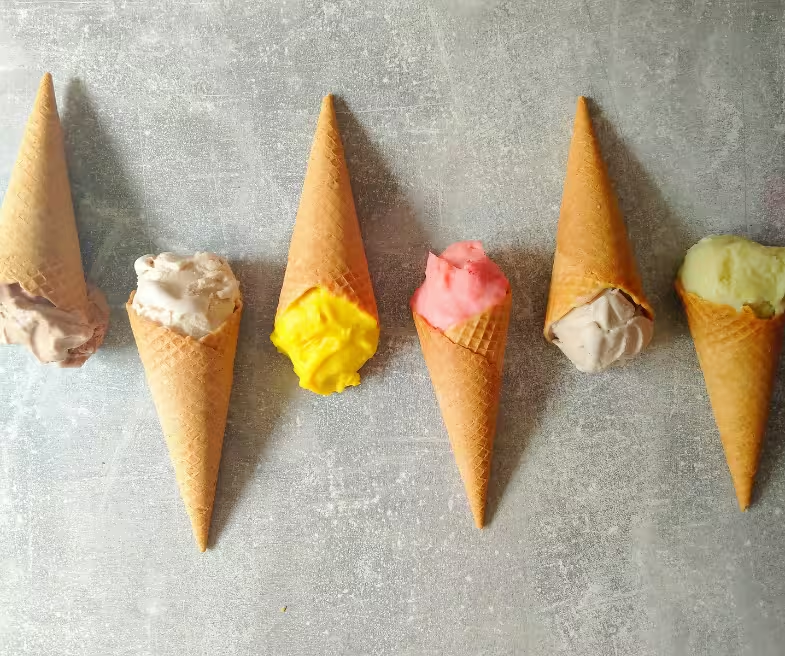
Making creamy homemade ice cream isn't always as easy as it seems. After a few hours in the freezer, some mixtures become too hard, develop ice crystals, or melt quickly once served. The solution? Use a suitable stabilizer to improve the texture and minimize the formation of ice crystals.
Discover the most effective stabilizers for making ice cream that’s creamier, smoother, and more enjoyable to eat.
Pectin: Perfect for fruit ice cream
Pectin is a natural fiber extracted mainly from apples and citrus fruits. Widely used in baking for jams and jellies, it is also an excellent ingredient for sorbets and fruit ice cream.
Its advantages
- Improves the consistency of fruit-based preparations.
- Reduces crystallization.
- Gives it a smoother, creamier texture.
- Preserves the fruit's natural flavors.
Agar-agar: A Plant-Based Alternative
Agar-agar is a natural gelling agent derived from red algae. It is particularly popular among people looking for a plant-based alternative to gelatin.
Its advantages
- 100% plant-based.
- Slightly improves the structure of the ice.
- Easy to find in stores.
Gelatin: The Traditional Stabilizer
Gelatin, which has long been used in artisanal ice cream production, remains one of the most effective stabilizers for improving texture.
Its advantages
- Adds moisture.
- Reduces crystal formation.
- Enhances the creamy mouthfeel.
- Makes storage easier.
Simple tip: slightly increase the dry matter
If you don't want to use a specific stabilizer, a simple method is to slightly increase the amount of dry ingredients in your recipe.
For example:
- Add a little powdered milk to milk ice cream.
- Slightly increase the proportion of fruit in a sorbet.
- Maintain a good balance between sugar, fat, and water.
This technique helps limit the amount of free water in the mixture and helps reduce crystal formation during freezing.