How to Make the Perfect Homemade Brioche?
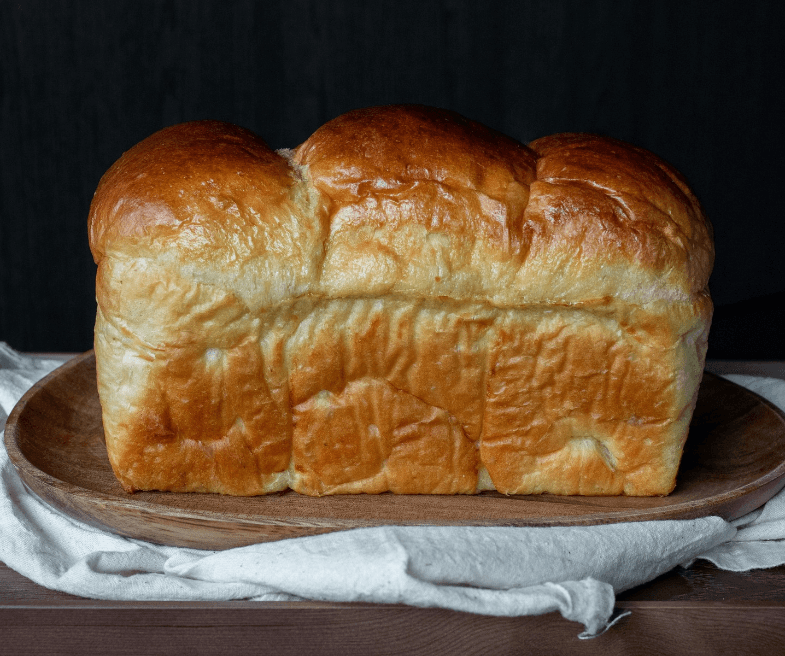
A successful homemade brioche is one that’s well-risen, soft, and light, with a stringy, airy crumb. However, whether the dough won’t rise, the brioche turns out too dense, or the dough is impossible to work with, a few challenges can quickly arise.
The good news? The success of a brioche depends mainly on a few key factors: baker's yeast, kneading, the quality of the ingredients, rising times, and the temperature of the dough.
In this guide, learn the techniques you need to know to make a perfect homemade brioche and find out how to fix the most common problems.
The 5 Essential Rules for Making a Perfect Brioche
Before we get into the details, here are the key points to remember:
- Use a flour with a high gluten content, such as T45 flour or whole-wheat flour.
- Choose the right baker's yeast and avoid exposing it to excessively high temperatures.
- Knead long enough to develop the gluten network.
- Allow for the necessary rising times and give the dough time to rise.
- Monitor the temperature of the dough, especially during prolonged kneading.
These five factors directly influence the volume, texture, and softness of the brioche.
1. What kind of yeast should you use to make a perfect brioche?
Baker's yeast is essential for making brioche dough rise. It is a living microorganism capable of producing carbon dioxide during fermentation.
This gas is then trapped within the dough's structure and contributes to the formation of air pockets. It is this process that allows the brioche to rise and develop a light texture.
Fresh yeast or dry yeast: which one should you choose?
Baker's yeast is mainly available in two forms:
- fresh baker's yeast, usually sold in the refrigerated section or at the bakery,
- dry baker's yeast, which is easy to find in the baking aisle.
Fresh yeast is particularly well-suited for making homemade brioche, but either type can be used as long as you follow the specific measurement instructions for the product you choose.
Should fresh yeast be diluted?
It isn't necessarily required.
Fresh yeast can be crumbled directly into the mixture. However, dissolving it in a liquid helps distribute it more evenly throughout the dough.
In this case, be careful with the temperature: the liquid must not be too hot, or it could damage the yeast.
The key takeaway
Avoid placing the yeast directly next to the salt when preparing the dough. For example, you can arrange the ingredients separately in the mixing bowl before you start kneading.
2. Why is kneading so important for brioche?
Kneading is one of the key steps in achieving a stringy crumb and a well-risen brioche.
During kneading, the proteins in the flour help form a network: the gluten network.
This network gives the dough its elasticity and allows it to retain the gas produced during fermentation. A properly kneaded dough can thus rise while maintaining its structure.
How can you tell if brioche dough has been kneaded enough?
Rather than relying solely on a specific time, it's best to keep an eye on the dough.
Dough that has been kneaded sufficiently gradually becomes:
- smoother,
- more uniform,
- more flexible,
- more elastic.
You can also do the "veil" test: gently pinch off a small piece of dough and stretch it between your fingers.
If the dough can form a thin, almost translucent membrane without tearing immediately, the gluten network is sufficiently developed.
How long should you knead a brioche?
There is no universal timeframe.
Two stand mixers with different power ratings may require very different kneading times. Depending on the equipment and the recipe, kneading can take anywhere from 15 to 20 minutes, or even longer.
The best indicator, therefore, is the consistency of the dough rather than the stopwatch.
Pay attention to the temperature while kneading
Kneading for too long causes the dough to heat up. If it becomes too hot or very warm, stop kneading and place the dough in the refrigerator for about 10 minutes, then resume if necessary. If using a stand mixer, it’s best to use the dough hook.
3. What ingredients should you choose for a soft brioche?
Technique matters, but the choice of ingredients also plays an important role in the final result.
Flour
Choose a T45 flour that is high in gluten. Whole-wheat flour is also a very good option for yeast-risen dough.
The right type of flour helps create a gluten network that is strong enough to produce a well-risen brioche.
Keep in mind, however, that not all flours absorb liquids in exactly the same way. As a result, two batches made with the same quantities may have slight differences in texture.
Butter
Choose a high-quality unsalted butter containing about 82% fat.
When a recipe calls for adding an ingredient during kneading, add it gradually in small pieces so that it incorporates properly into the dough.
Eggs
Eggs are key to the richness and texture of brioche. Be sure to use fresh eggs and follow the quantities listed in your recipe.
Salt
Salt is an essential ingredient in brioche dough.
It enhances the flavor and helps achieve the right balance in the dough. As a general guideline, a recipe containing 500 g of flour may call for about 6 to 10 g of salt, depending on the specific recipe.
Milk
Depending on the recipe, you can use whole milk, low-fat milk, or skim milk. Some recipes can also be made with a suitable plant-based milk.
4. How do you properly incorporate butter into brioche dough?
To achieve a smooth, elastic dough, add the butter gradually rather than all at once.
When the recipe calls for it:
- Start kneading the dough.
- Add the butter, cut into pieces.
- Wait until each addition has been incorporated before continuing.
- Continue kneading until the dough is smooth and elastic.
- Check the development of the gluten network using the veil test.
Don't worry if the dough seems to fall apart temporarily after adding the butter. Continuing to knead it usually allows it to gradually regain a more uniform texture.
5. Can you make brioche without a stand mixer?
Yes, you can definitely knead brioche by hand. It just takes a little more time and effort.
Knead the dough on a very lightly floured work surface, alternating between stretching and folding until the dough is soft and elastic.
The goal remains exactly the same as with a robot: to develop the gluten network sufficiently.
However, avoid adding too much flour just because the dough sticks to your hands. Brioche dough is naturally soft and may remain slightly sticky.
6. How do you let brioche dough rise?
Making brioche requires patience. The rising time allows the dough to ferment and gradually increase in volume.
One possible approach is to divide the process into three phases:
First sprouting: at room temperature
Generally, let the dough rise for 1 to 2 hours at room temperature, adjusting the time based on the conditions and the recipe.
Second sprouting: in the refrigerator
The dough can then be refrigerated for 12 to 18 hours.
Cold temperatures slow down fermentation without necessarily stopping it. This extended resting period also makes it easier to shape dough that is high in butter.
Step 3: Primer
After shaping, let the brioche rise again—for about 45 minutes, for example—or according to your recipe's instructions.
The exact duration depends, among other things, on the room temperature and the activity of the dough.
7. Why can the same brioche recipe produce different results?
Brioche dough develops through the action of living microorganisms. Its behavior is therefore influenced by its environment.
Several factors can affect the result:
- the room temperature,
- the temperature of the ingredients,
- humidity,
- the type of flour,
- the absorption capacity of the flour,
- the duration and intensity of kneading,
- fermentation conditions.
So you can follow the exact same recipe and still notice small differences from one batch to the next.
The key is to learn to observe the dough rather than simply following predetermined times.
8. How do you make a beautifully golden brioche?
For a nice finish, lightly brush the brioche before baking.
Brushing the surface with beaten egg produces a shiny, richly colored finish. Milk can also be used to achieve a generally softer color.
9. How can you add a gourmet touch to brioche?
For an extra touch of indulgence, add the following as desired:
- pearl sugar,
- chocolate chips,
- pink pralines,
- raisins.
You can also flavor the dough with vanilla, orange blossom, or citrus zest.
10. How do you store homemade brioche so it stays soft?
Air is one of the main enemies of a soft brioche.
Once cooled, wrap the brioche carefully to minimize its exposure to air. This will help it retain its texture for longer.
A simple method is to:
- Let the brioche cool completely on a wire rack.
- Wrap it carefully in plastic wrap.
- Store it at room temperature in a dry place.
Under the right conditions, a homemade brioche can stay soft and moist for about 2 to 3 days, although its texture will gradually change.
11. Failed Brioche: The Most Common Problems and Their Solutions
Why isn't my brioche rising?
If a brioche doesn't rise at all, it may be due to a problem with the yeast or the fermentation process.
There are several points to check:
- Is the yeast still active?
- Was it exposed to a temperature that was too high?
- Was the growing period long enough?
- Was the room particularly cold?
A difference of just a few degrees in the room can significantly affect the fermentation rate.
Why is my brioche dense after baking?
A dense crumb can be caused, in particular, by insufficient kneading or insufficient fermentation.
If the gluten network is underdeveloped, the dough is less effective at trapping the gases produced during fermentation. The crumb may then be denser.
Before stopping the kneading, perform the windowpane test and also check that the dough has risen enough.
Why is my brioche dough so sticky?
Brioche dough can naturally be soft and slightly sticky.
Avoid adding a large amount of flour right away, as this may upset the balance of the recipe and make the brioche drier.
If the dough is really too runny or impossible to work with, small amounts of flour can be added gradually—about 10 g at a time—while monitoring how it changes.
Before doing that, simply kneading the dough a little longer may sometimes be enough.
Why does my brioche taste like yeast?
A particularly strong yeast flavor can be caused by several factors: too much yeast, an insufficient amount of salt, or improper fermentation conditions.
For a recipe calling for 500 g of flour, be sure not to use more than 25 g of fresh baker's yeast, unless otherwise specified in the recipe.
Also be sure to follow the specified amounts of salt and rising times.
Why isn't my brioche rising in the refrigerator?
Don't panic: the cold significantly slows down yeast activity.
A dough may therefore seem very active at room temperature but then rise much more slowly once placed in the refrigerator. That is precisely the point of a long, cold rise.
Why isn't my brioche baked through in the center?
If the brioche browns quickly on the outside but remains undercooked in the center, the baking time or the size of the brioche may be to blame.
A few tips:
- Place the brioche in the center of the oven,
- Follow the temperature specified in the recipe,
- Adjust the baking time based on the size and shape of the dough.
- Avoid relying solely on the color of the crust.
A deeply golden brioche isn't necessarily cooked all the way through.
FAQ: Everything You Need to Know to Make the Perfect Homemade Brioche
-
What kind of flour should I use for a brioche?
T45 flour, which is high in gluten, works very well for making brioche. Coarse-ground flour is also particularly well-suited for yeast-risen doughs.
-
What kind of yeast should I use for a brioche?
You can use either fresh or dry baker's yeast. Fresh yeast is an excellent choice for brioche. In any case, be sure to use the correct amount for the type of yeast you choose.
-
How do you get a soft, stringy brioche crumb?
Adequate kneading, proper gluten development, and controlled fermentation are essential for achieving a stringy, airy crumb.
-
How can you tell if a brioche has been kneaded enough?
Perform the windowpane test. When gently stretched between your fingers, a small portion of properly kneaded dough should form a thin membrane before tearing.
-
Can you make brioche the day before?
Yes. Letting the dough rise in the refrigerator overnight—when called for in the recipe—allows you to spread the preparation over two days and generally makes shaping easier.
-
Why do you have to put the brioche in the refrigerator?
Cold temperatures slow down fermentation. They also make a butter-rich dough firmer and therefore generally easier to shape.
-
What should you do if the brioche dough is sticky?
Start by continuing to knead the dough and avoid adding flour too quickly. If the dough is still too sticky, add very small amounts of flour gradually.
-
Can you knead brioche by hand?
Yes. Kneading by hand requires more patience, but the goal is the same: to achieve a smooth, elastic dough with a sufficiently developed gluten network.